While I was out with my camera at one of my favorite spots, a mudflat in the backwater of the Ohio River. I stopped my car when I saw a small sparrow fly into a brushy area. While I was searching for the bird that I thought might have been a swamp sparrow, my attention was diverted when I noticed another small brown bird walking on the ground near the water.
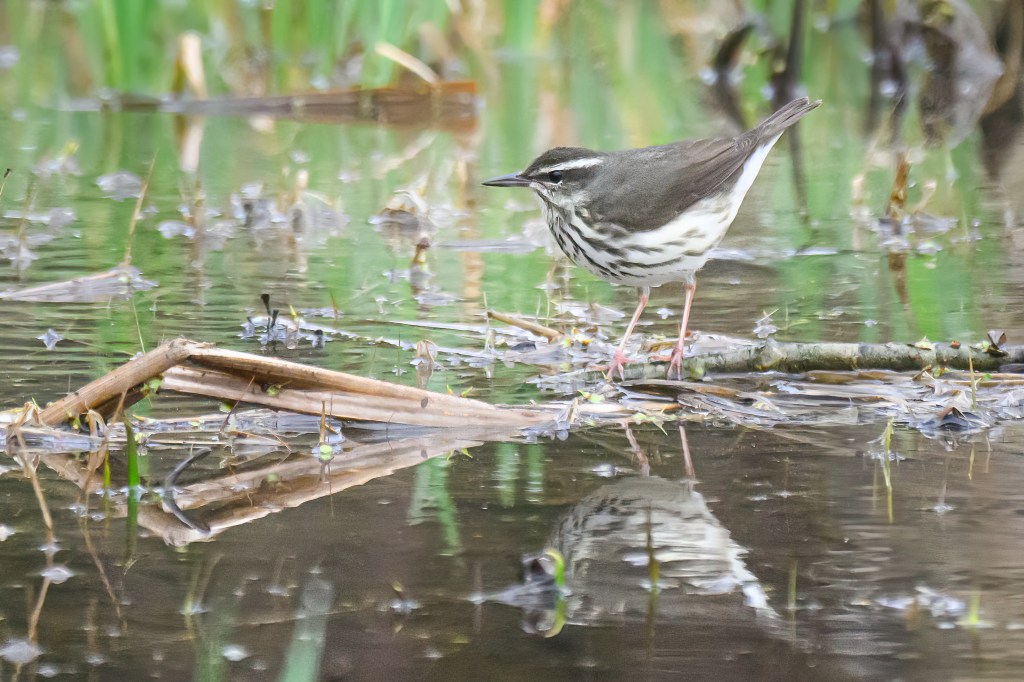
At first, I thought it might be the swamp sparrow, but then I noticed it had a plain brown back, white underparts with black streaks. As the bird foraged near the water, its tail bobbed up and down. I fixed my camera on the bird and became excited as I realized it was a Louisiana Waterthrush.
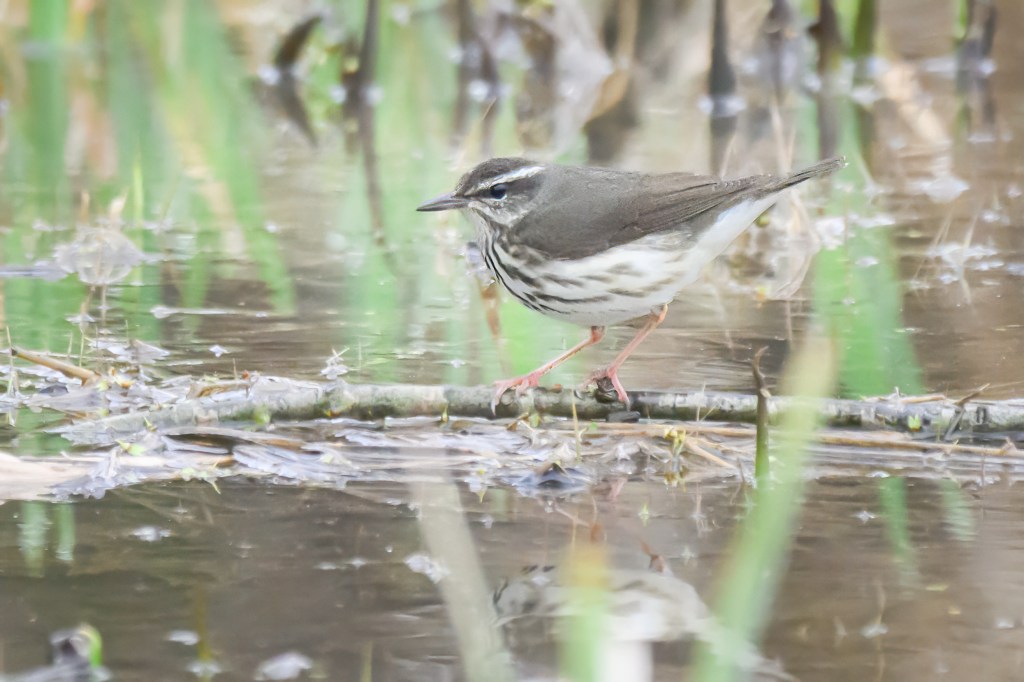
The Louisiana Waterthrush was about 20 feet away, and even with my 600mm lens and a 1.4x teleconverter, the very small bird did not fill the frame. The sky was heavily overcast, so I used a slower-than-normal shutter speed to keep my ISO as low as possible. Since I knew that my final image would require a significant crop, I aimed to maintain a low ISO to capture as much detail as I could. The settings for this image were 1/400 seconds at f/9, ISO 7200. If I had used a faster shutter speed of 1/800 seconds, the ISO would have increased to 14400, and the grain from the digital noise would have reduced the detail in the image. To compensate for the slower shutter speed, I captured many more images than usual, hoping to get a few sharp ones. Over the next 15 minutes, I managed to photograph more than 1,300 images of the bird foraging and feeding in front of me.
What I found particularly exciting about this experience was getting to photograph the bird in its natural habitat.
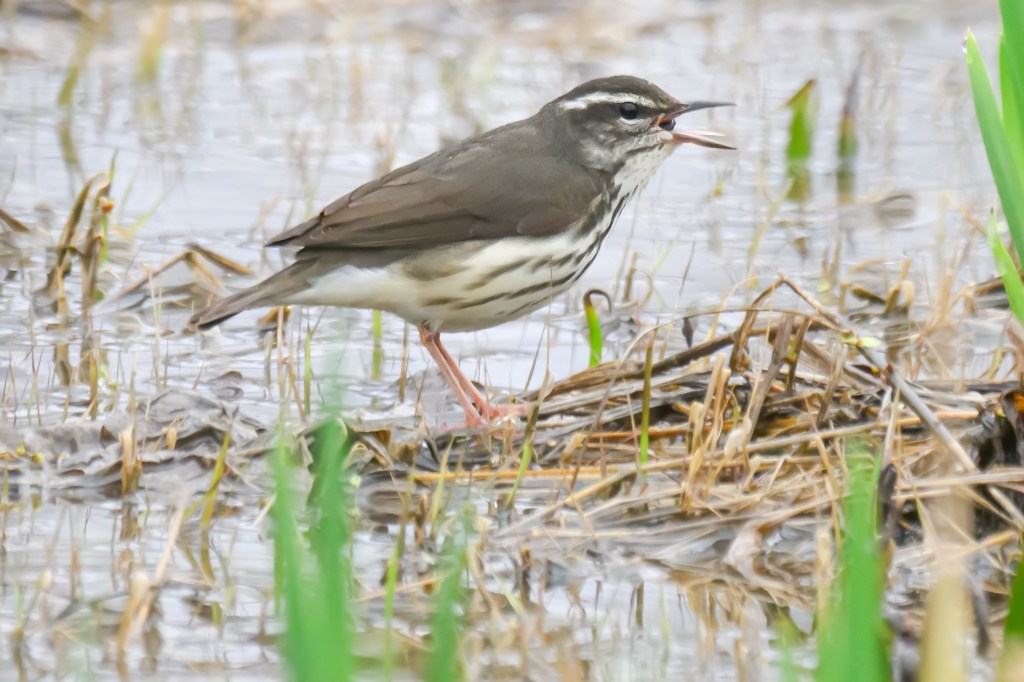
Birds in their natural habitat offers a truly rewarding experience.
visit my Flickr site to see high-res images of the Louisiana Waterthrush
 Birdtography
Leave a comment